
The Prompt: Elon Musk’s ‘Compute Gigafactory’ Launches in Memphis
Welcome back to The Prompt.
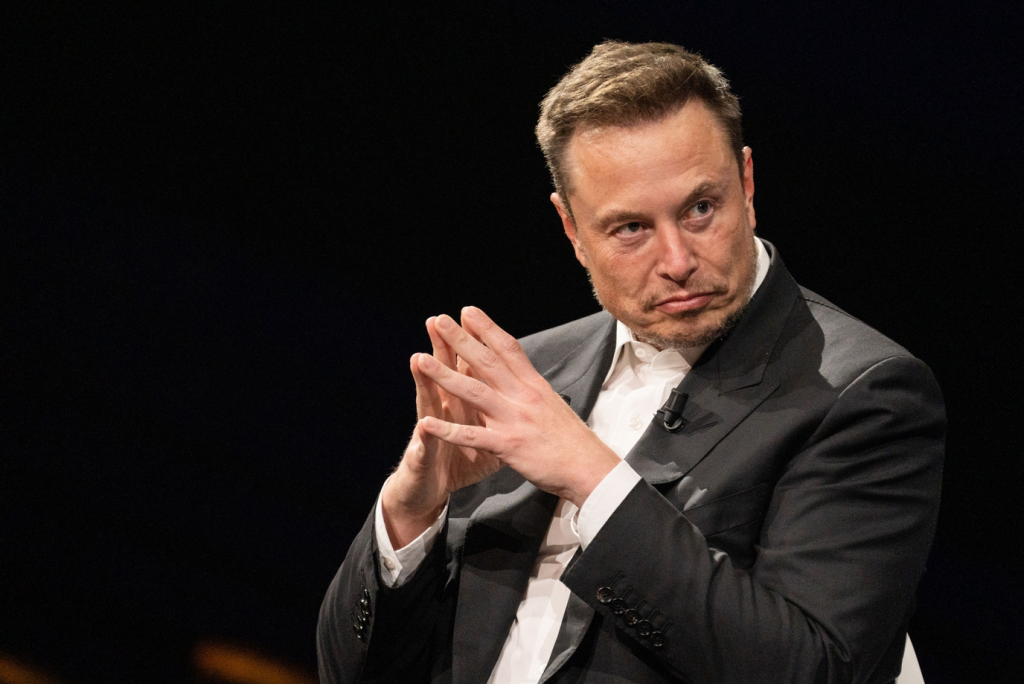
Elon Musk has unveiled a massive supercomputer in Memphis, referred to as a “compute gigafactory.” The facility, named Project Colossus, officially began operations yesterday, according to a post by Musk on X. This data center, housing 100,000 Nvidia H100 chips, is designed to train Grok, a ChatGPT rival developed by xAI. However, several city council members expressed concerns to Forbes about being excluded from key decisions regarding the facility and raised alarms over its potential impact on Memphis's already overburdened power grid and water resources.
The data center is set to consume 50 megawatts of electricity—sufficient to power approximately 50,000 homes—and will require 1.3 million gallons of water daily for cooling purposes. Despite the company’s assurances of enhancing the city’s infrastructure with new developments, Musk’s history of unfulfilled promises leaves local officials skeptical.
Peak Performance
Today, Meta introduced Llama 3.1, its most advanced AI model to date, boasting 405 billion parameters, making it the largest open-source AI model available. Meta claims that Llama 3.1 outperforms leading AI models like OpenAI’s GPT-4o and Anthropic’s Claude 3.5 Sonnet in tasks such as mathematics, translation, and reasoning. The model, trained on 16,000 Nvidia H100 GPUs, now powers Meta’s AI assistant, which CEO Mark Zuckerberg predicts will surpass ChatGPT in usage by year’s end. In an open letter, Zuckerberg advocated for the superiority of open-source AI models, emphasizing their safety and transparency compared to closed-source systems.
In related news, Mistral AI, an open-source AI model developer, has launched two specialized academic models—Mathstral and Codestral—which are particularly adept at solving math problems and generating code.
Big Plays
OpenResearch, a nonprofit supported by OpenAI CEO Sam Altman, published findings from a three-year study on the impact of universal basic income (UBI). In the experiment, 3,000 participants received a monthly stipend of either $50 or $1,000 with no conditions attached. The study, which explores UBI as a response to potential job losses due to AI, found that the extra cash provided recipients with greater flexibility in job searches, access to medical care, and the ability to assist family members with their financial needs.
AI Deal of the Week
In a move to compete with Nvidia, chip manufacturer AMD has acquired Helsinki-based AI research company Silo AI for $665 million, marking the largest AI company acquisition in Europe since Google’s purchase of DeepMind for $400 million in 2014, according to Forbes. Silo AI, a research lab with 300 PhDs, has developed an open-source large language model capable of interpreting and generating text in both English and Nordic languages.
In other news, Monarch Tractor, an autonomous tractor company, secured $113 million in funding, pushing its valuation to over $500 million—making it the largest fundraising round for an agricultural robotics company to date.
Deep Dive
AI Chatbot Misses the Mark


