
🚀 The Celestial Handshake: Transferring Satellites for Launch
The transfer of a satellite—such as the PakSat-MM1 or the iCube-Qamar—involves much more than just shipping a box. It is a multi-stage technical and diplomatic procedure.

1. Pre-Shipment: The "Clean Room" Phase
Before a satellite ever leaves the Space and Upper Atmosphere Research Commission (SUPARCO) facilities, it undergoes rigorous testing. This includes:
The process of transferring the Pakistani satellite to China before its launch into space pic.twitter.com/ppjQINo1L6
— China pulse 🇨🇳 (@Eng_china5) February 11, 2026
- Thermal Vacuum Testing: Simulating the extreme temperatures of space.
- Vibration Testing: Ensuring the satellite can survive the violent "shaking" of a rocket launch.
- Final Inspection: Once certified, the satellite is placed in a nitrogen-purged, shock-absorbent shipping container to prevent contamination or damage.
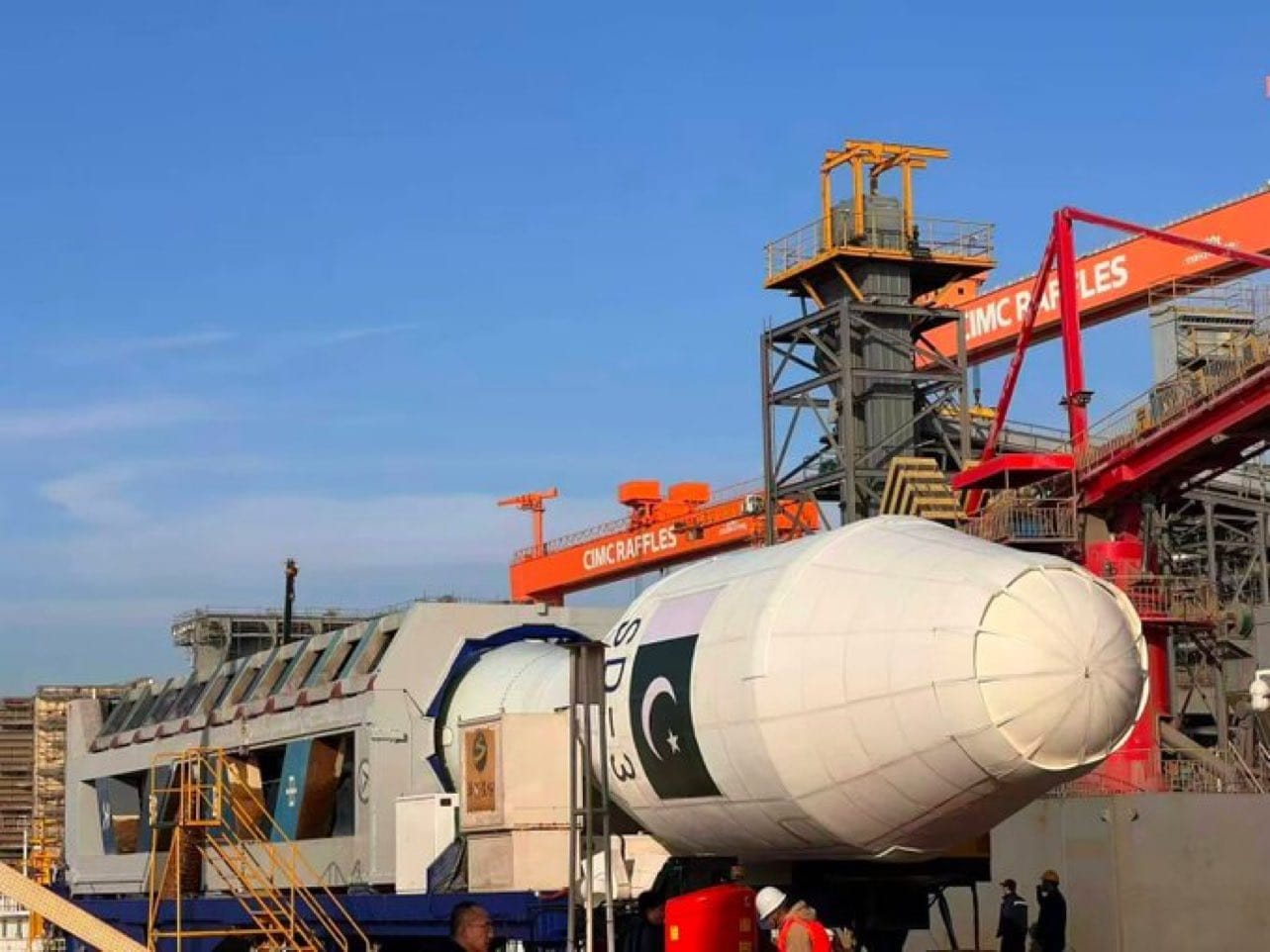
2. The Logistics of Sovereignty
Transporting a satellite is a matter of national security. The transfer usually involves:
- Chartered Transport: Large satellites (like the 5,400kg PakSat-MM1) are typically flown via specialized cargo aircraft (like the Ilyushin Il-76 or Boeing 747 Freighter) directly to Chinese launch hubs like Xichang or Hainan.
- Diplomatic Clearance: As high-tech hardware, these transfers are governed by bilateral agreements that bypass standard customs to ensure the technology remains secure and "untouched."
3. Arrival and Integration at the Launch Center
Upon arrival at a Chinese site (such as the Xichang Satellite Launch Center), the satellite doesn't go straight to the rocket.
- Post-Transit Health Check: Engineers from both SUPARCO and the China Great Wall Industry Corporation (CGWIC) perform "aliveness tests" to ensure no components were jarred during flight.
- Fueling: The satellite is loaded with propellant (hydrazine) for its orbital maneuvers. This is one of the most hazardous parts of the process.
- Encapsulation: The satellite is "mated" to the launch vehicle adapter and then enclosed within the payload fairing(the nose cone of the rocket).
⚡🇵🇰🇨🇳 — SUPARCO's PRSC EO-2, an electro-optical high resolution satellite was successfully launched by a Chinese SD-3 launch vehicle, today.https://t.co/1hgLF60O2R pic.twitter.com/A6KaWHg0Qq
— ⚡️Faisal🤺 (@92security) February 12, 2026
⚡🇵🇰🇨🇳 — SUPARCO's PRSC EO-2, an electro-optical high resolution satellite was successfully launched by a Chinese SD-3 launch vehicle, today.https://t.co/1hgLF60O2R pic.twitter.com/A6KaWHg0Qq
— ⚡️Faisal🤺 (@92security) February 12, 2026
4. The Final "Lift"
The encapsulated satellite is transported to the launch pad and hoisted atop a Long March (Chang Zheng) rocket. From this point, the mission enters the countdown phase, where Chinese launch teams and Pakistani ground controllers synchronize their systems for the final ascent.
A major milestone in its space journey
— Khawaja Hamzaa (@khawajahamzaiq3) February 12, 2026
SUPARCO successfully launches the indigenous EO-2 satellite from China’s Yangjiang Seashore Centre, boosting Earth observation, disaster management, governance, and strategic planning capabilities.
#EO2 #SUPARCO #PakistanSpace pic.twitter.com/KbzkoZLJU4
📊 Comparison of Recent Pakistan-China Missions
| Satellite | Launch Date | Launch Site | Purpose |
| iCube-Qamar | May 2024 | Hainan (Chang'e 6) | Lunar Exploration |
| PakSat-MM1 | May 2024 | Xichang | High-speed Broadband |
| PRSC-EO2 | Feb 2026 | South China Sea (Sea-Launch) | Remote Sensing / Earth Observation |
❓ Frequently Asked Questions (FAQ)
Q: Why does Pakistan launch its satellites from China?
A: China possesses advanced launch infrastructure (Long March rockets and multiple spaceports) that Pakistan is currently developing. It is more cost-effective and reliable to use established Chinese facilities through strategic partnerships.
Q: How long does the transfer process take?
A: The physical transport takes a few days, but the "Launch Campaign"—which includes arrival, testing, and integration—usually lasts 30 to 60 days before the actual liftoff.
Q: Who controls the satellite once it is in space?
A: While China provides the "taxi ride" to space, the "steering wheel" is handed back to Pakistan. Most Pakistani satellites are controlled via ground stations in Islamabad and Karachi.