Samsung Galaxy Watch Ultra Review: A Big, Beautiful Contender in the Smartwatch Market
Samsung's Galaxy Watch Ultra is, whether intentionally or not, the Android alternative to Apple's popular Watch Ultra. As Samsung stands as Apple’s main competitor globally, it’s no surprise that the Galaxy Watch Ultra is the first device to feature Google's WearOS 5

beating Google’s own Pixel Watch 3 to market. After spending two weeks testing the Galaxy Watch Ultra in two separate trials, I can confidently say that the watch mostly lives up to its high expectations. It’s a large, stunning, feature-rich, and intelligent device, but it doesn’t offer the same seamless experience as the Apple Watch Ultra—largely due to the inherent challenges of WearOS needing to work with a wide range of Android phones from various manufacturers.
Hardware: Bigger, Better, and More Functional
The Galaxy Watch Ultra builds on the foundation of the standard Galaxy Watch we’ve seen over the years, offering more in every way: more battery life, more screen space, more buttons, and more features. The watch is equipped with an improved optical heart rate sensor, an emergency siren, and multiband/dual-frequency GNSS (Global Navigation Satellite System) capabilities, particularly useful for runners.
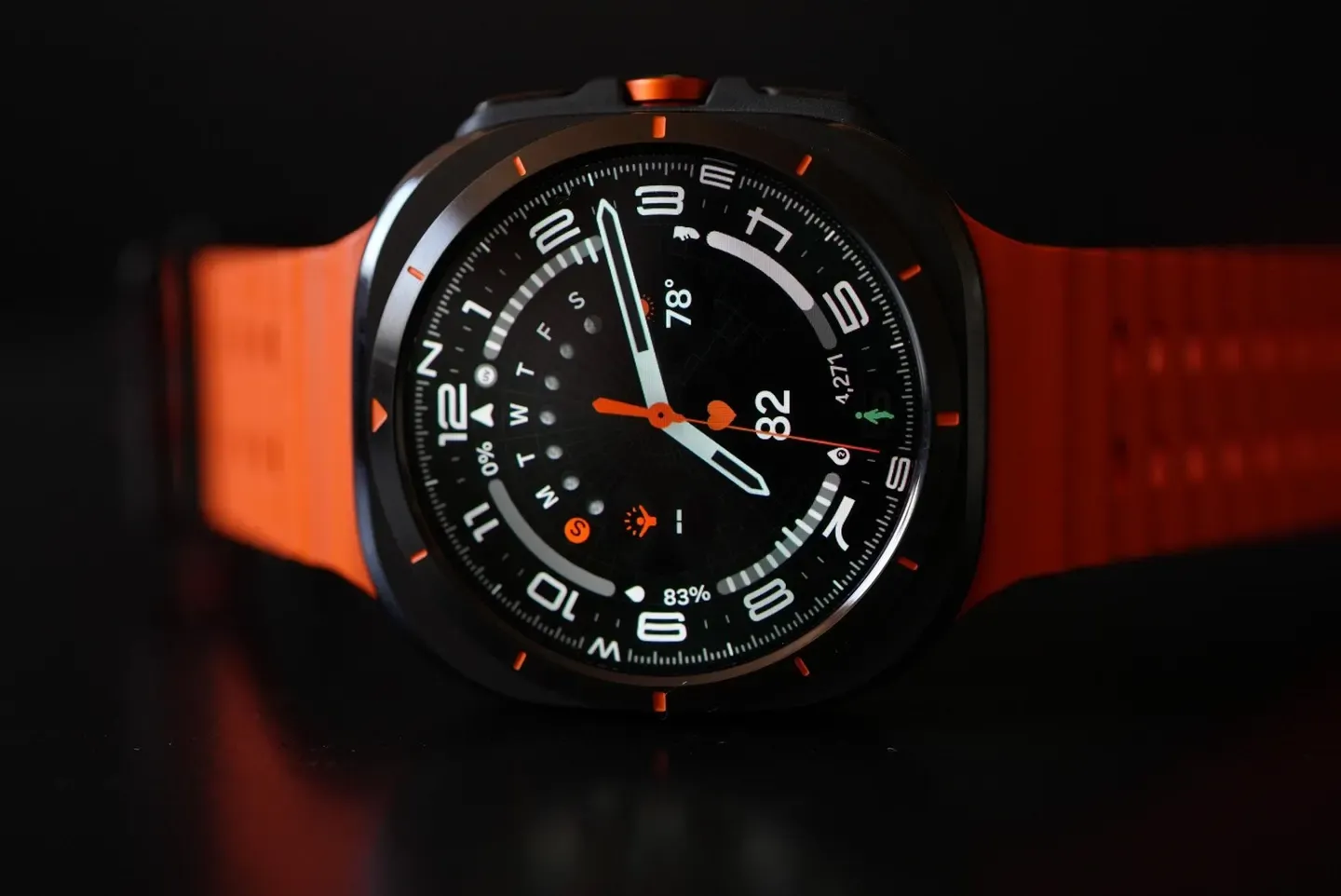
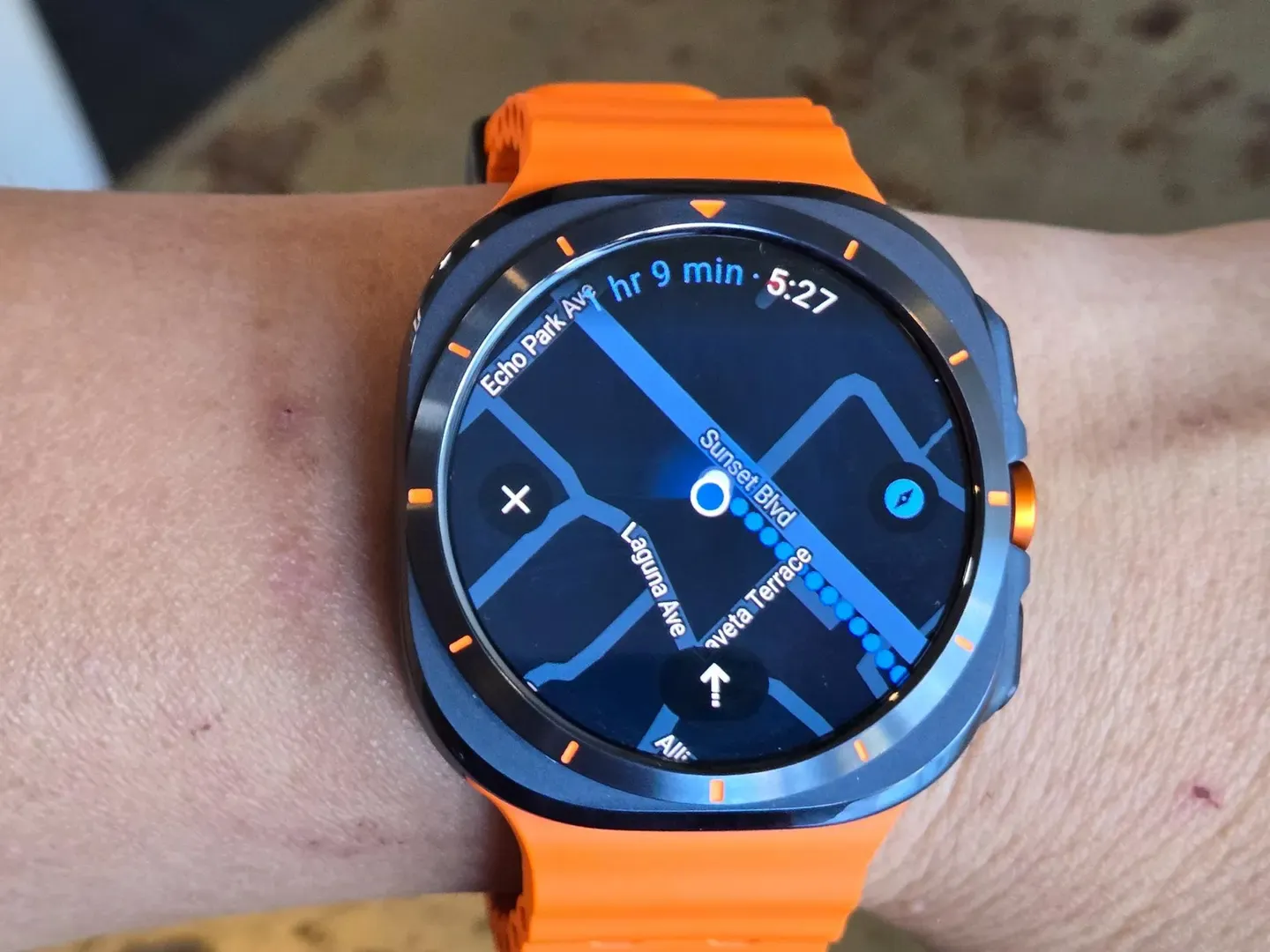
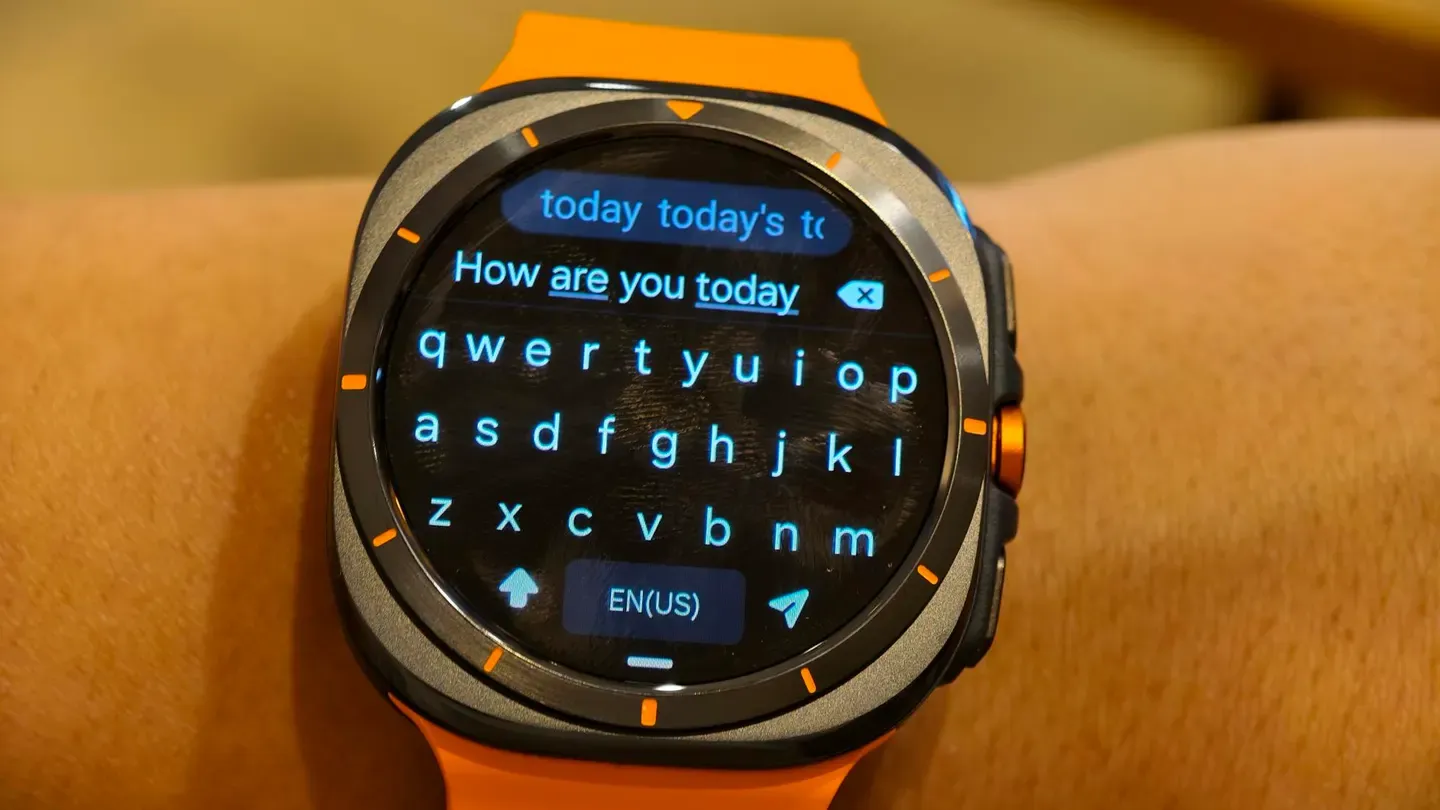
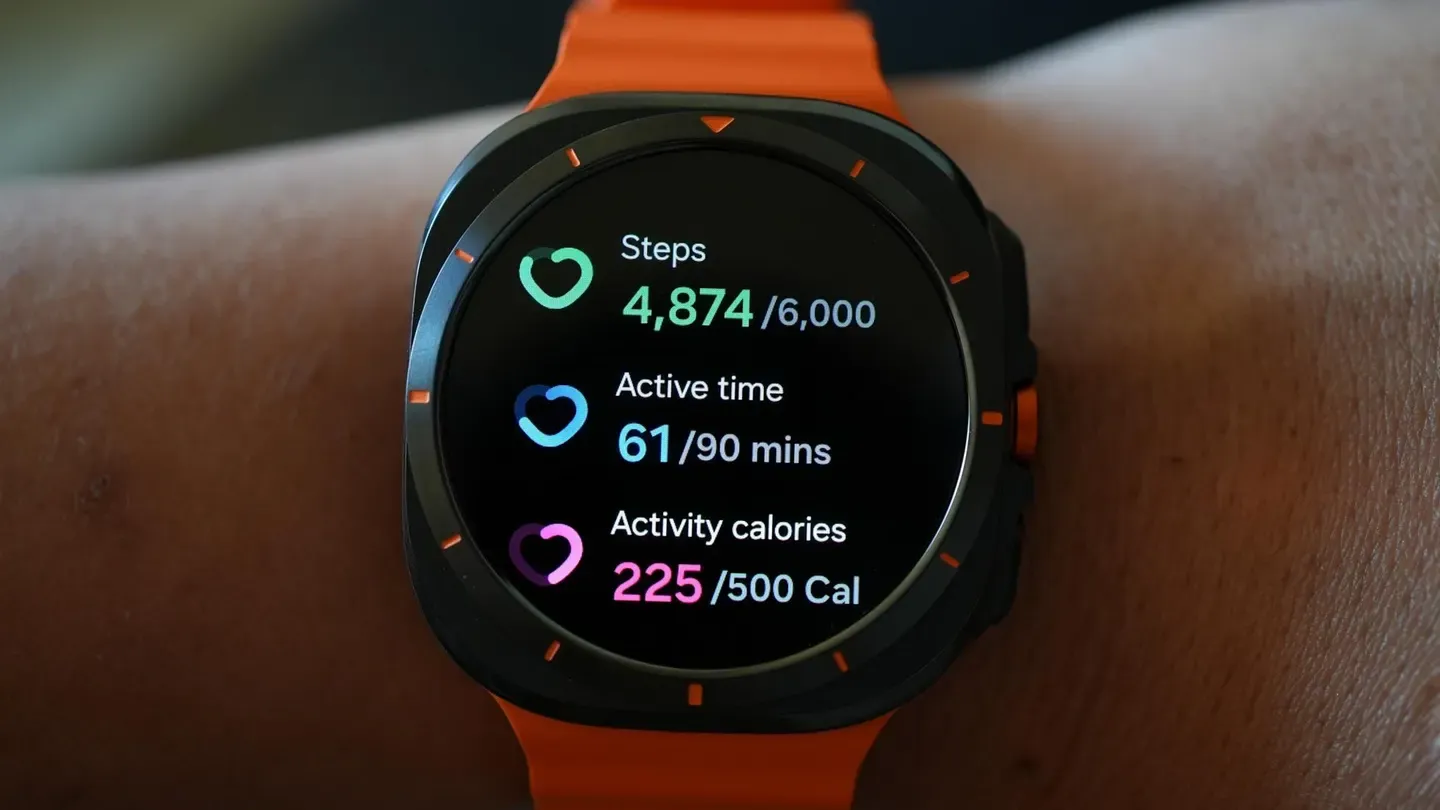
Unlike previous Samsung watches, which were entirely circular, the Galaxy Watch Ultra sports a "squircle" shape—half circle, half square. It features a raised bezel that protects the vibrant 1.5-inch screen. Although the bezel doesn’t physically rotate like in older models, it now includes a touch-sensitive panel that registers swipes, with satisfying haptic feedback simulating the experience of rotating the bezel.
The 1.5-inch display boasts a brightness of up to 3,000 nits, making it easy to read even in direct sunlight. Despite its thickness of nearly half an inch, the watch’s rounded edges make it comfortable to wear, offering a more natural fit compared to the sharper edges of the Apple Watch Ultra.
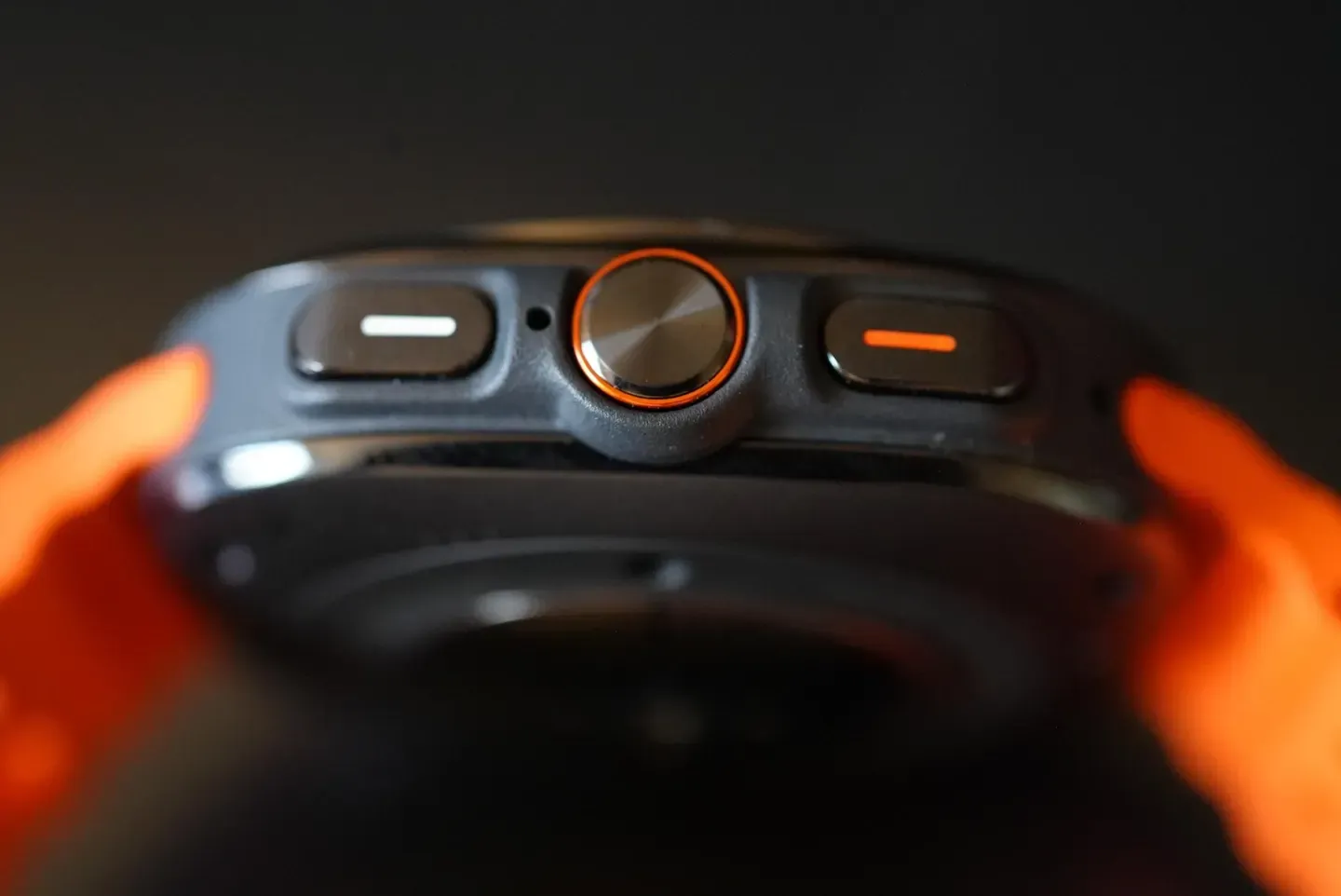
On the right side, the watch features three buttons: two tactile buttons flanking a rotatable and clickable circular crown. On the left, speaker grills provide surprisingly loud audio, primarily for voice calls.
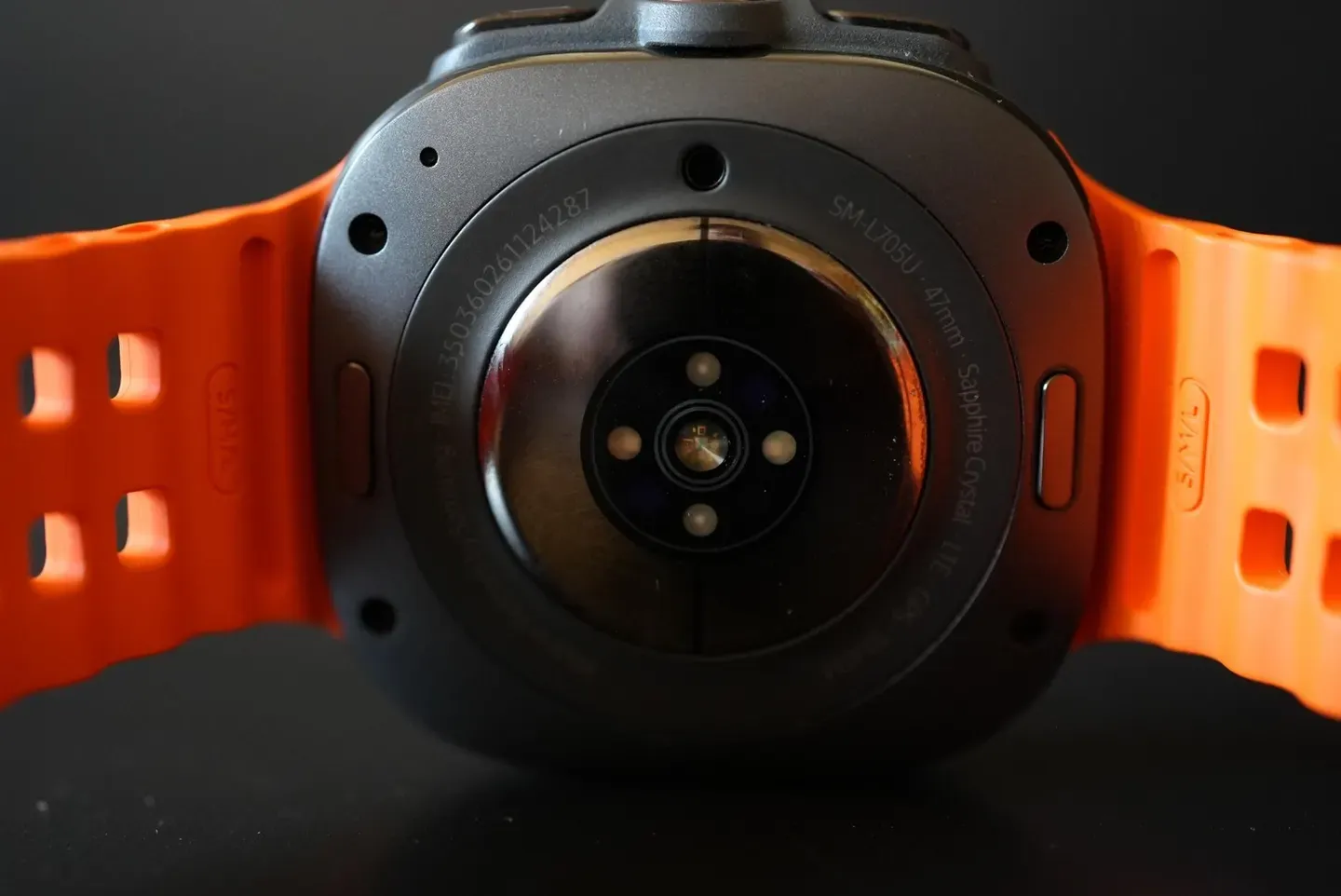
The Galaxy Watch Ultra’s backside houses the upgraded "BioActive" sensor, which includes 16 LED lights emitting blue, yellow, violet, and ultraviolet rays to monitor various health metrics. The sensor suite includes an accelerometer, barometer, blood oxygen monitor, heart rate monitor, pedometer, gyroscope, and a temperature sensor.
While I’m active in the gym and frequently cycle around the city, I’m not an adventurous outdoorsman, so I didn’t put the Galaxy Watch Ultra through extreme tests like mountain climbing or deep-sea diving. However, during my review period, I wore the watch nearly all day, tracking my workouts, steps, and heart rate with impressive accuracy compared to my Apple Watch and personal estimates.
Powered by a 3nm Exynos W1000 chip, 2GB of RAM, and 32GB of storage, the Galaxy Watch Ultra is a powerhouse. Its 590mAh battery offers nearly three full days of use—an improvement over previous Samsung watches, which typically require nightly charging.