
In 1926, television was still a mechanical marvel
The Mechanical Era of Television: John Logie Baird's Pioneering Innovation
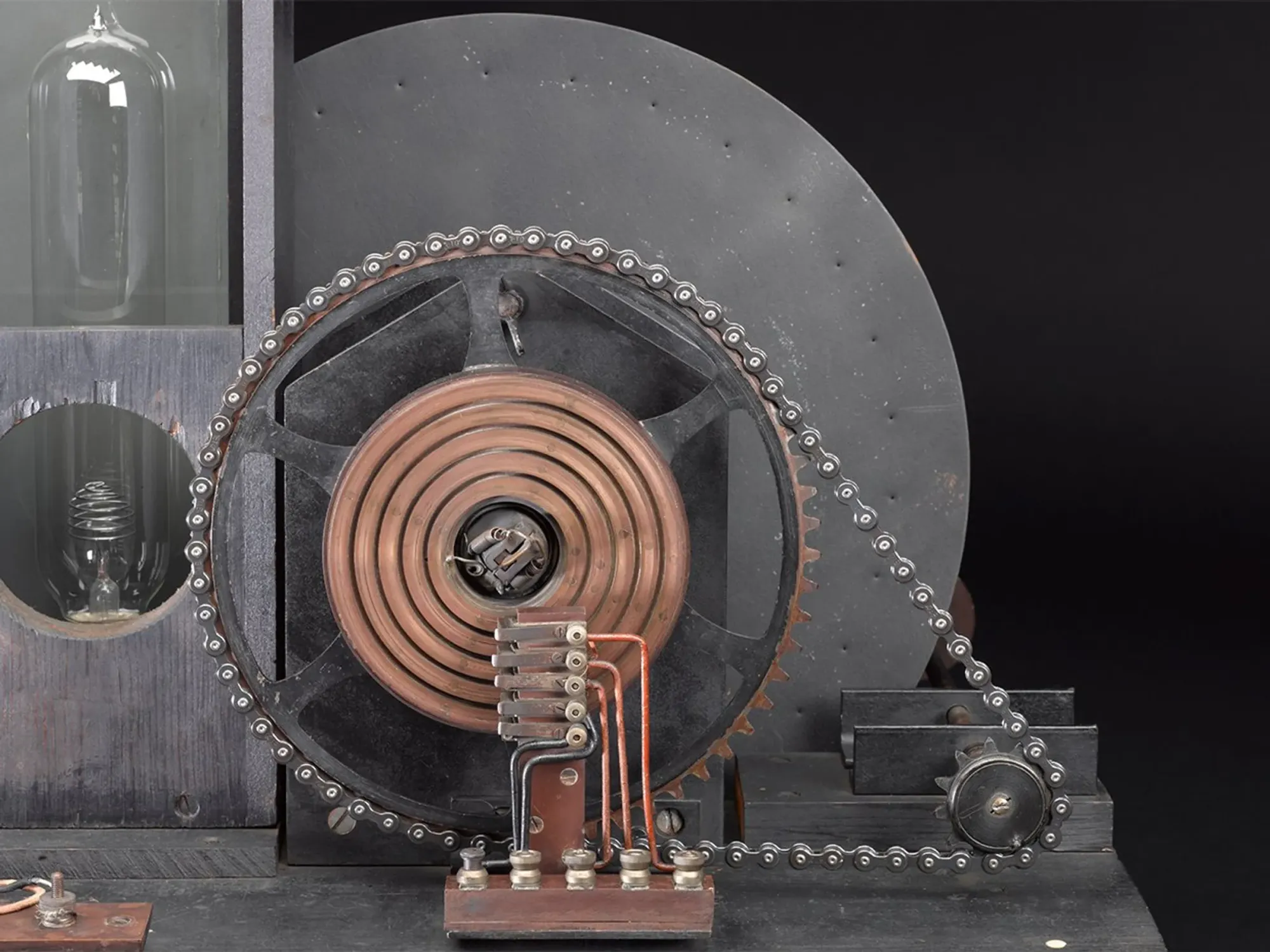
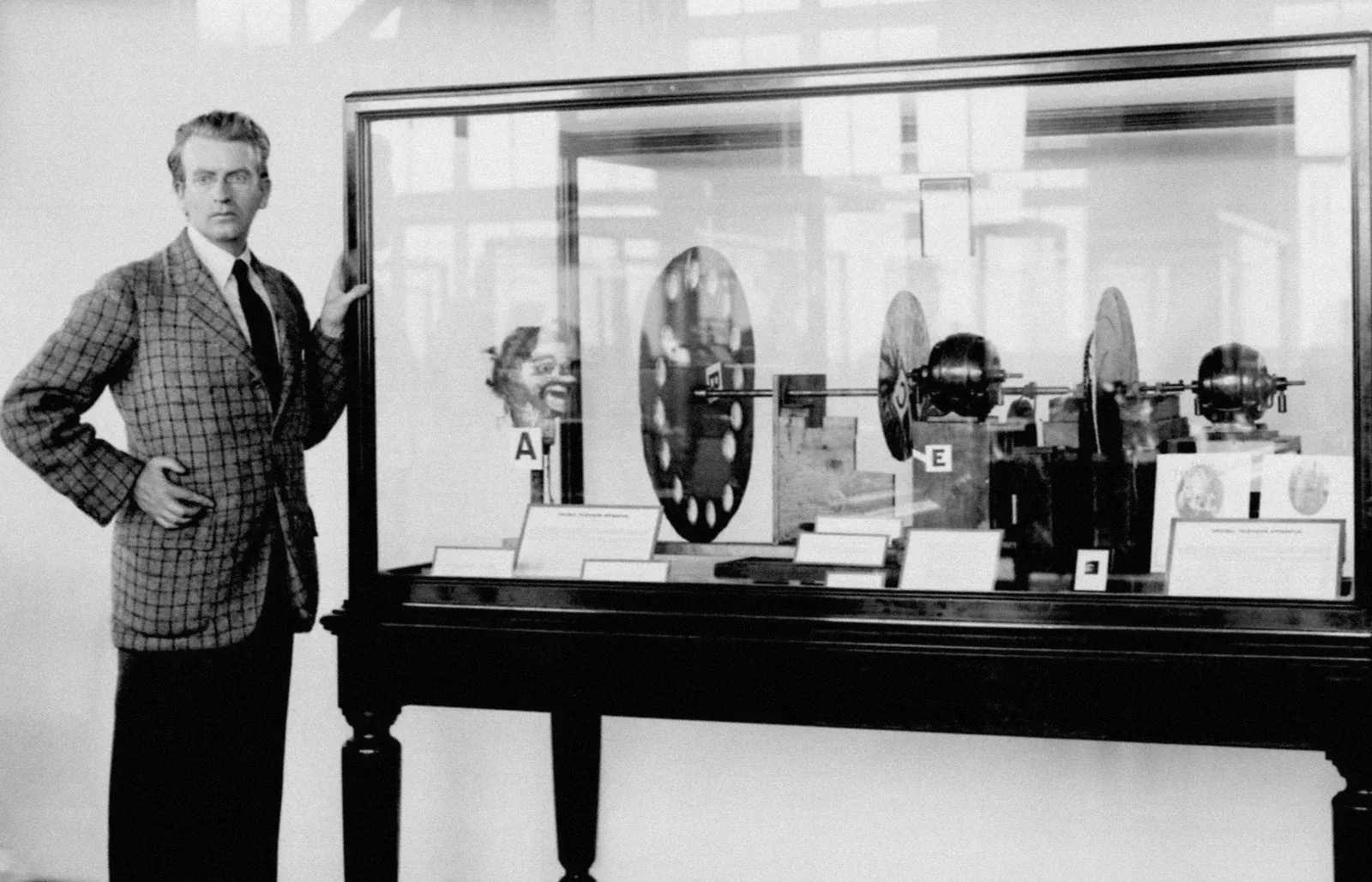
John Logie Baird, a Scottish inventor, crafted a revolutionary device centered around a spinning metal disk. Baird, renowned for his inventive prowess, had explored various concepts, including phonovision—a primitive video recording system using phonograph records—and noctovision, which employed infrared light to view objects in darkness, potentially laying the groundwork for radar.
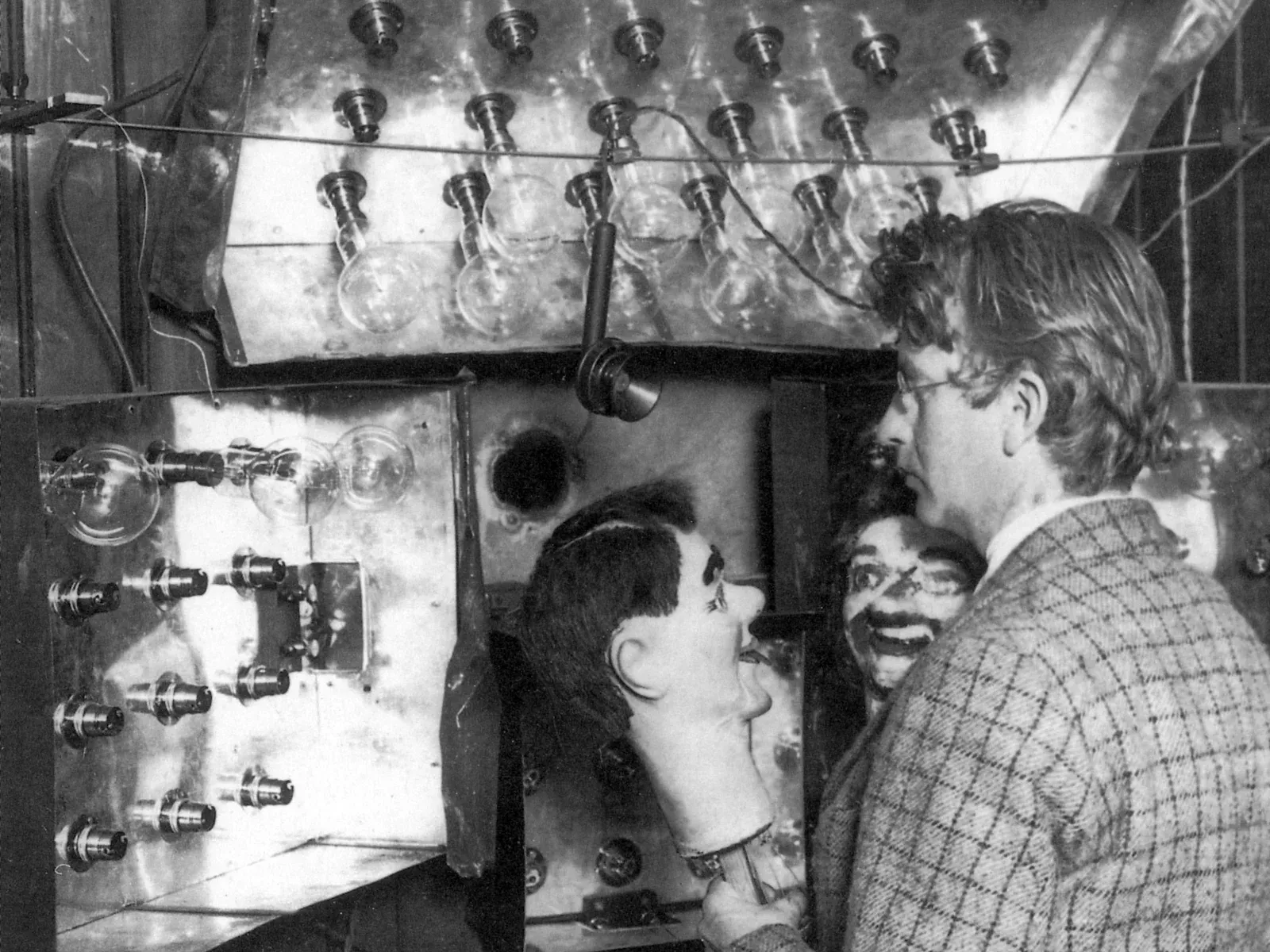
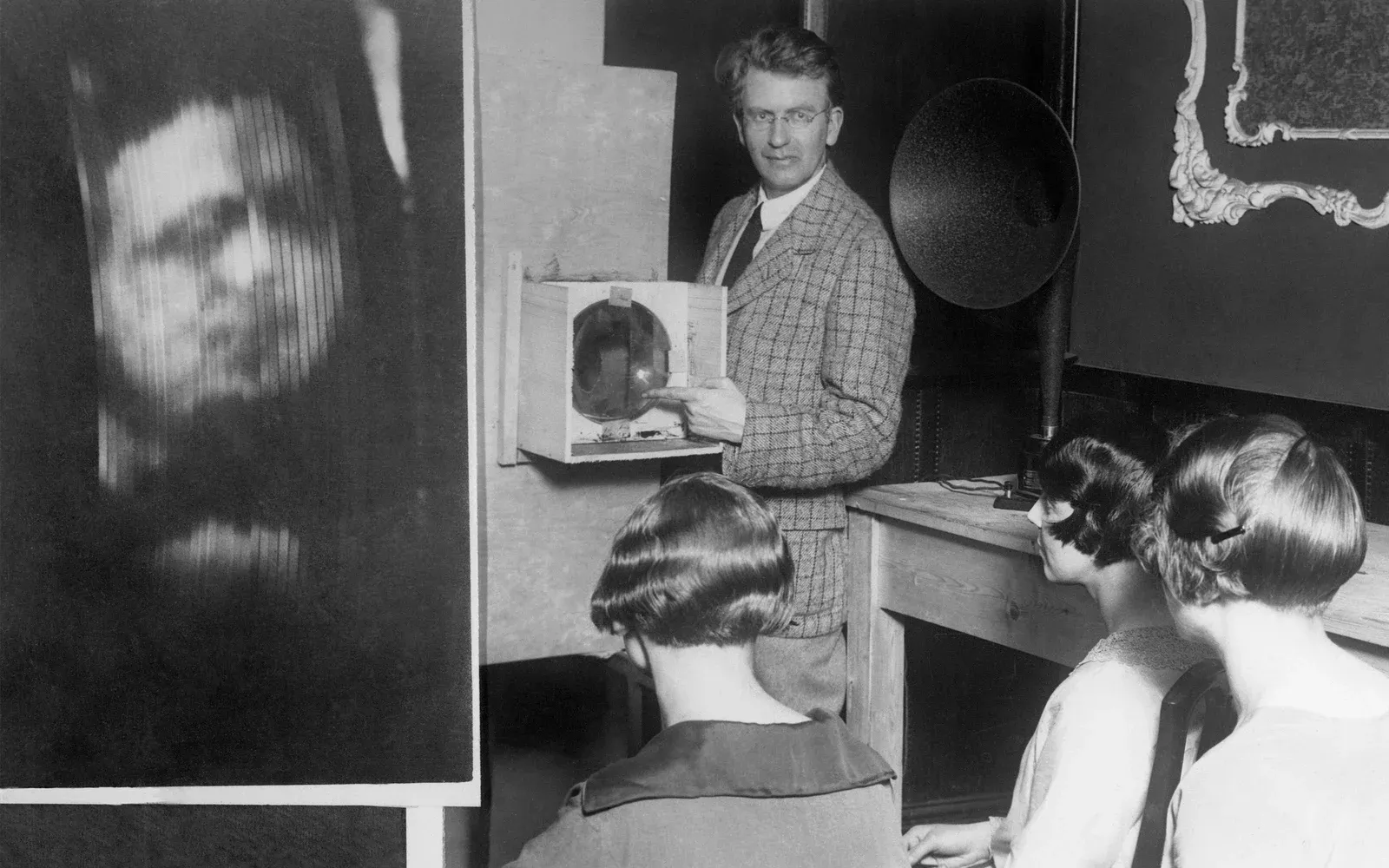
However, it was Baird's televisor that etched his name into history. On January 26, 1926, an exclusive audience at London's Royal Institution witnessed a groundbreaking demonstration. Baird broadcast a sharply defined image of a ventriloquist's dummy, showcasing his televisor’s electromechanical transmission capabilities. This demonstration also included a live human subject, further cementing Baird’s claim as the pioneer of television’s public debut.
The Nipkow Disk and Baird’s Televisor
It's important to note that Baird did not invent television from scratch. The concept of television evolved through the contributions of many inventors. Baird's foundational technology was inspired by Paul Nipkow’s “electric telescope,” patented in 1885. Nipkow’s device used a rotating disk with perforations to capture images as vertical lines, converting them into electrical signals for transmission and reconstruction.
Baird utilized Nipkow’s principles, incorporating two Nipkow disks—one in the transmitter and one in the receiver—each equipped with 30 perforations. The disks, paired with glass lenses and photoelectric cells, converted light into electrical signals and back, reconstructing images on a screen. Early experiments relied on dummies because the bright lights required for proper illumination made it too uncomfortable for human subjects.
Debating the First Television Broadcast
Historical records reveal complexities in claiming the "first" television broadcast. Baird’s initial demonstration at Selfridges department store in March 1925, although notable, featured a device with lower resolution and fewer details. Baird himself described true television as a system that accurately transmitted images with all light and detail gradations, distinguishing the Selfridges demo as a preliminary test and the Royal Institution presentation as the official unveiling.
The 1926 demonstration marked a pivotal moment in Baird’s career. In 1927, he founded the Baird Television Development Company, leading to the first transatlantic television transmission in 1928. The BBC adopted Baird’s mechanical system for experimental broadcasts until 1937 when they transitioned to an electronic system developed by Marconi-EMI. Baird’s later work included early attempts at electronic color television and stereoscopic TV.
But Wait There’s More!
If you enjoyed this dip into the history of television, check out Spectrum’s new video collaboration with the YouTube channel Asianometry, which will offer a variety of perspectives on fascinating chapters in the history of technology. The first set of videos looks at the commercialization of color television.
Head over to Asianometry to see how Sony finally conquered the challenges of mass production of color TV sets with its Trinitron line. On Spectrum’s YouTube channel, you’ll find a video—written and narrated by yours truly—on how the eminent physicist Ernest O. Lawrence dabbled for a time in commercial TVs. Spoiler alert: Lawrence had much greater success with the cyclotron and government contracts than he ever did commercializing his Chromatron TV. Spectrum also has a video on the yearslong fight between CBS and RCA over the U.S. standard for color TV broadcasting. —A.M.
Contributions of Other Innovators
Television's evolution involved multiple contributors. Philo Farnsworth, an American inventor, pioneered an all-electronic system and developed the image dissector tube, enabling early television broadcasts. Farnsworth’s system, publicly demonstrated in 1934, eventually competed with RCA’s technology, leading to a patent dispute resolved in his favor in 1935.
Meanwhile, Vladimir Zworykin’s iconoscope, an advancement in electronic television technology, emerged from his collaboration with RCA. Despite its limitations, Zworykin's work significantly influenced television technology. The image orthicon, developed post-World War II, further advanced the industry’s capabilities.
The Uncertain Beginnings of Television
Early television’s path was fraught with uncertainties. Initially, it was unclear whether television would resemble telegraphs, telephones, films, or radio. Inventors and manufacturers had to persuade the public of television’s value, leading to numerous experimental approaches and technological developments.
Television’s history reflects a tapestry of innovation, competition, and adaptation. As Chris Horrocks explores in "The Joy of Sets," the medium’s development was closely tied to preceding technologies and the evolving needs and expectations of audiences.
This article delves into the mechanical origins of television, tracing its early developments and the contributions of key figures like John Logie Baird, Philo Farnsworth, and Vladimir Zworykin. The journey from mechanical to electronic television underscores the collaborative and iterative nature of technological progress.
An abridged version of this article is featured in the September 2024 print issue as "The Mechanical TV."
In 1936, a fire destroyed the Crystal Palace, where Baird had workshops, a television studio, and a tube manufacturing plant. With it went lab notebooks, correspondence, and original artifacts, making it more difficult to know the full history of Baird and his contributions to television.